
Build retro sprite comic concepts with modern controls.
Use style constraints, small palettes, and panel planning to keep sprite-inspired comics readable and consistent.
Start on this page
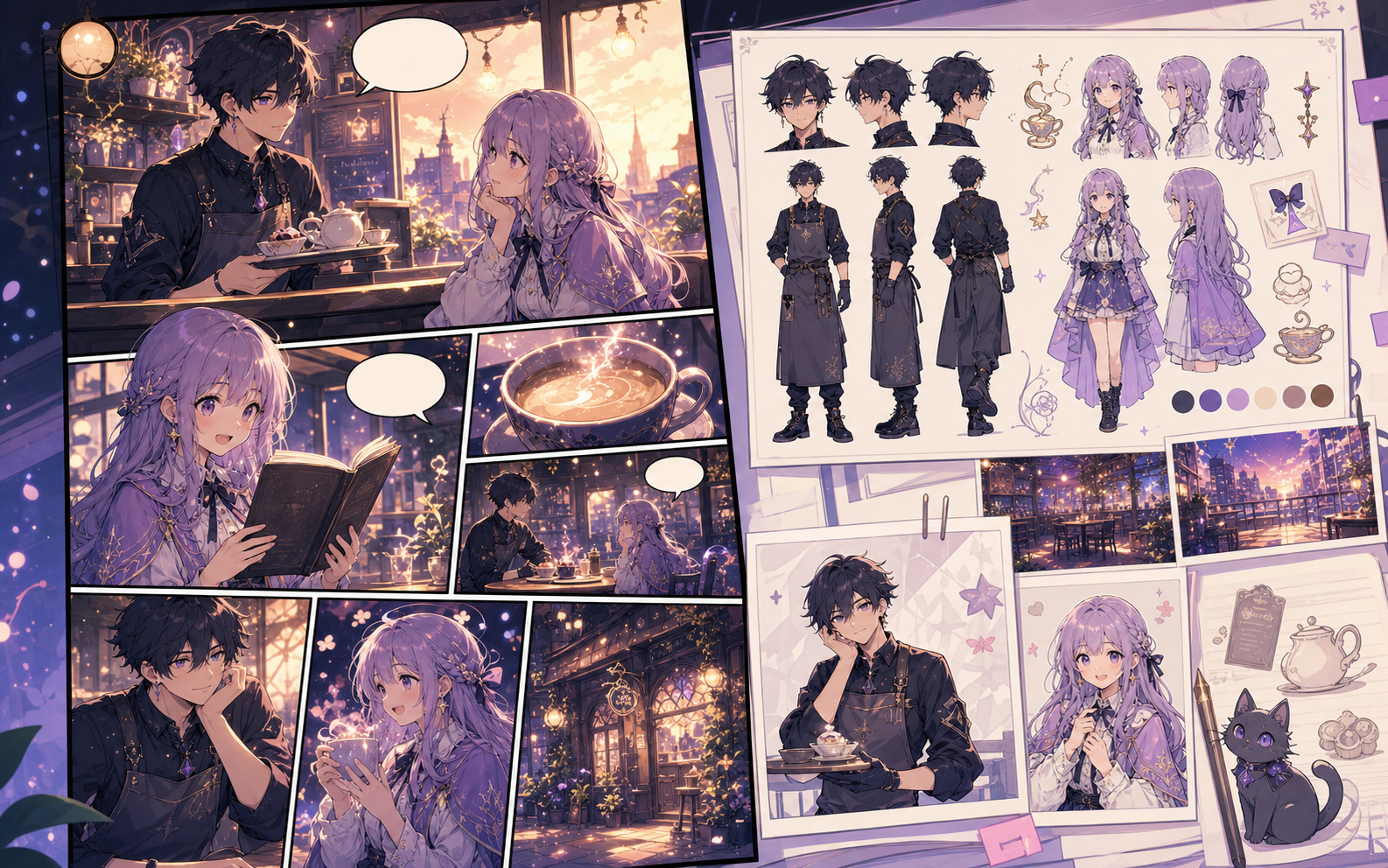
Sprite-comic scene
Describe simple staging, a limited color direction, and one action per panel. Final pixel cleanup still requires a pixel editor.
What this draft does not do
- The image model creates a sprite-inspired concept; it does not guarantee a game-ready pixel grid.
- Use a pixel editor for palette locking, tile alignment, and production sprite sheets.
Built around a real comic-making task.
Indie game teams, retro creators, and community managers making pixel-inspired comic updates.
01
Small-palette direction for readable retro scenes.
02
Strip layouts that fit game jokes and community posts.
03
A niche page that supports the broader comic maker workflow.
What creators can make here.
Pick the closest project type, then open Studio with a clearer idea of the draft you want to make.
What you can draft.
These are practical starting points for review, sharing, and continued editing.
A short path into Studio.
Start with the smallest useful step, then refine the draft inside the editor.
More comic creation pages.
Related workflow
AI Comic Maker for Editable Comic Pages
Use AI to draft comic panels, captions, and character-consistent scenes from one focused comic maker studio.
Open page
Related workflow
Free Comic Maker to Try Comic Ideas Online
Start with a free comic maker for a small comic draft, layout test, and downloadable project data before buying more generation credits.
Open page
Related workflow
Comic Maker Online for Browser-Based Creation
Create comic panels online from a browser with layouts, style controls, prompt helpers, and export-ready pages.
Open page
Common sprite comic maker questions.
Is this for real pixel art production?
It is best for sprite-inspired comic concepts and storyboards; final game-ready pixel assets may still need manual polish.
What makes a sprite comic readable?
Keep the palette limited, use simple staging, and make each panel beat clear before adding extra effects.
Start your next comic draft.
Open the Studio, choose a layout, and turn the idea into a working comic draft.
Try this workflow