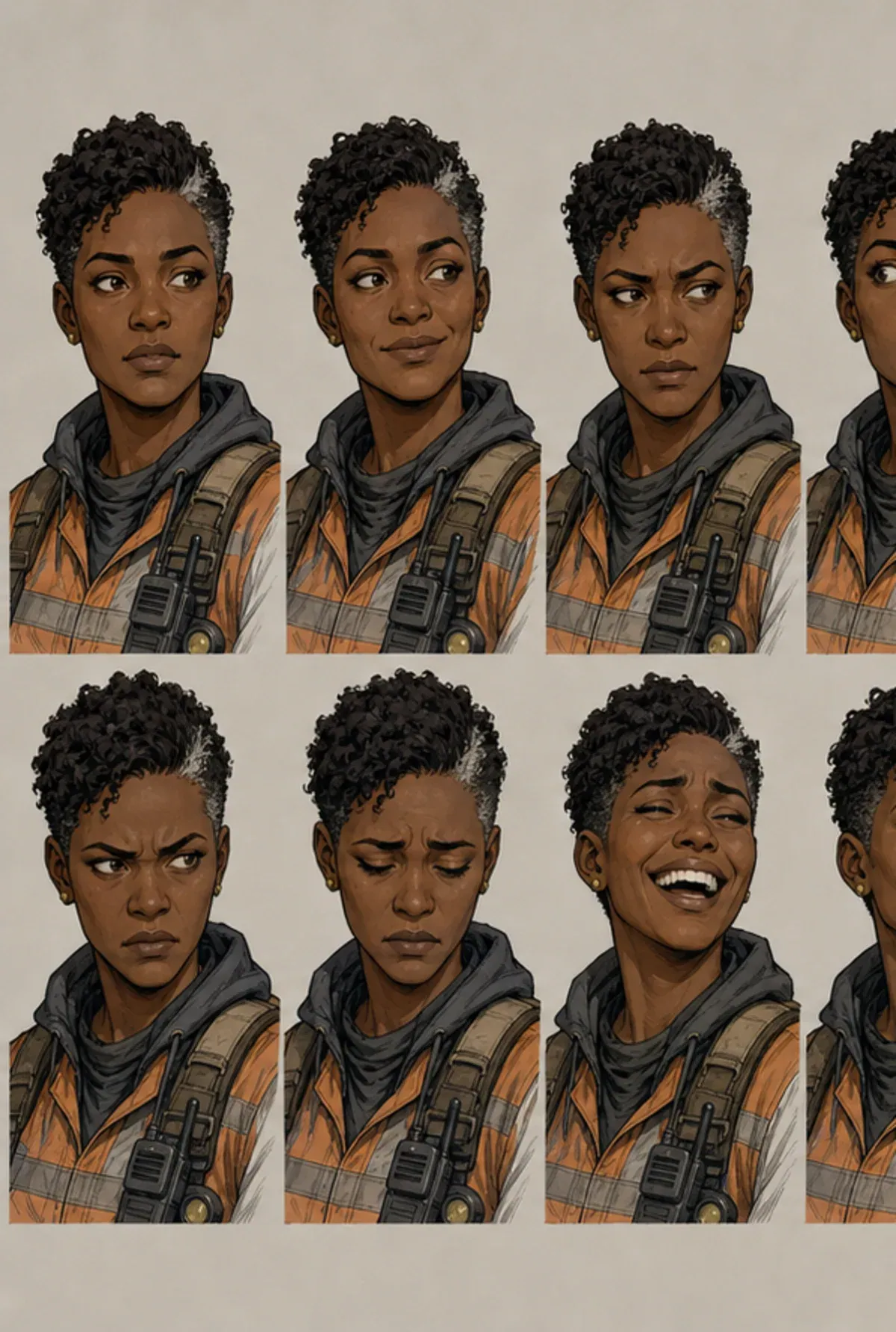
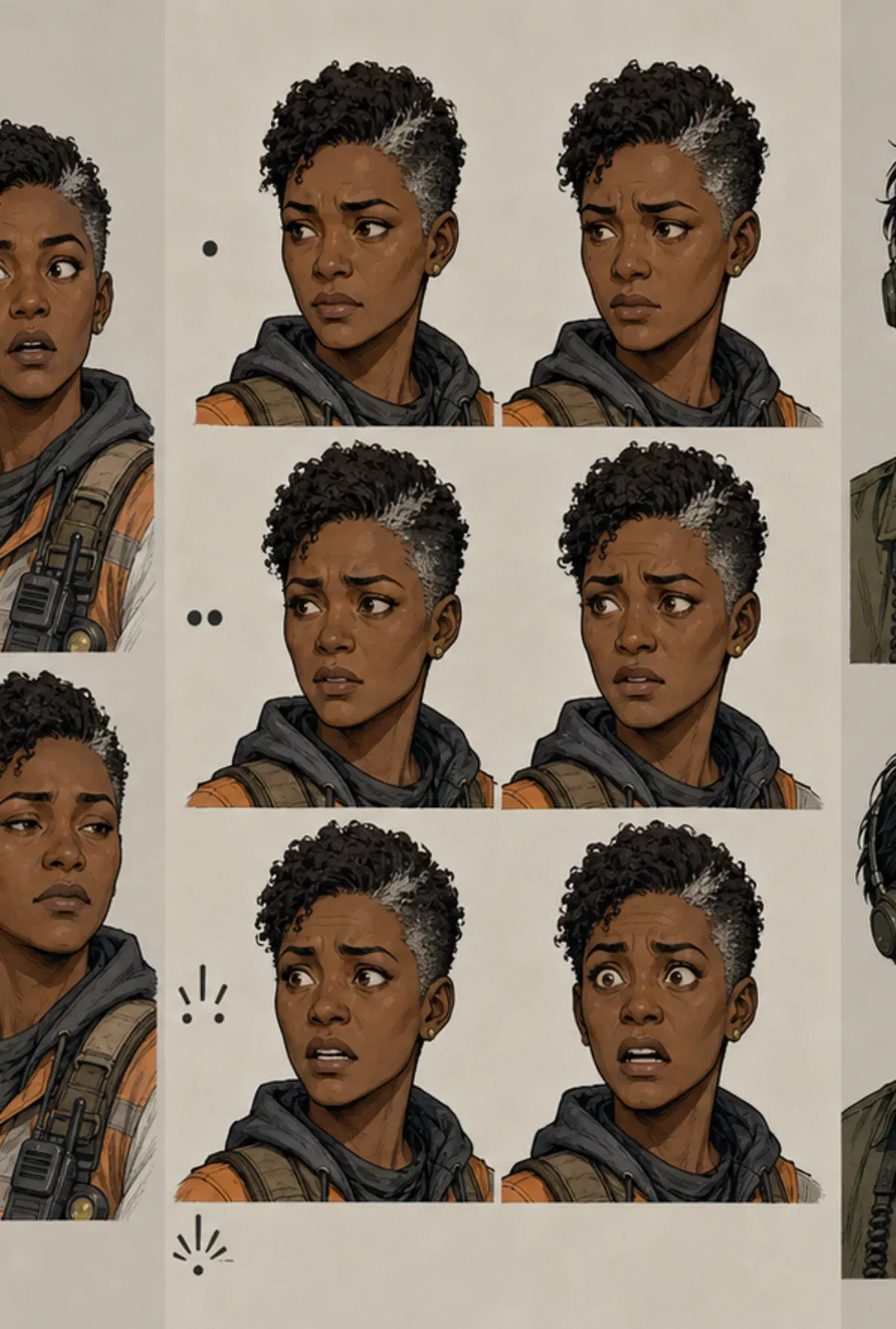
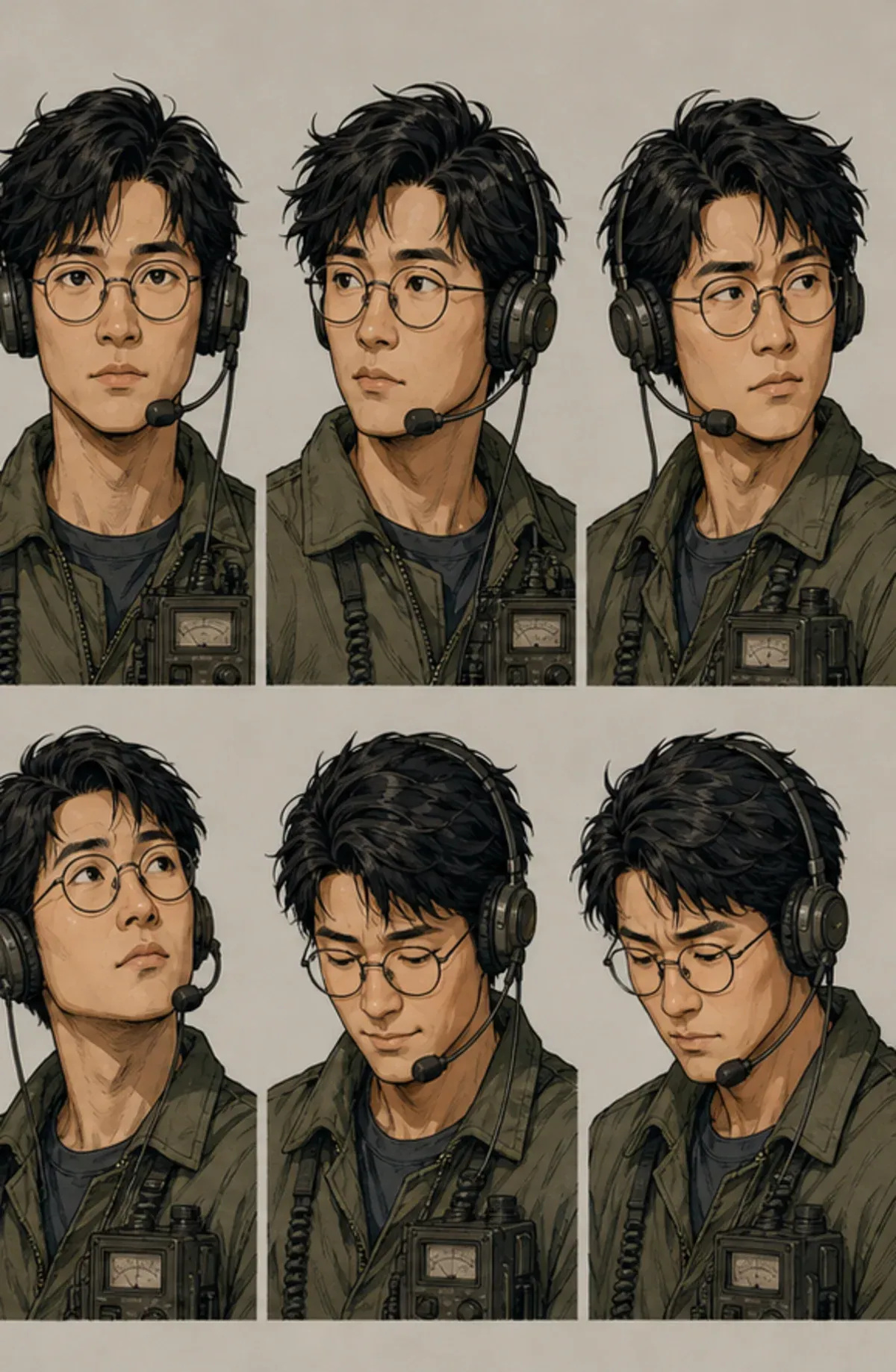
A character expression sheet generator is most useful when it knows what is allowed to move and what must remain stable. “Young detective, eight emotions” does not establish that boundary. The image model may change the jaw, age, hairstyle, eyelid shape, or costume from cell to cell because none of those features has been declared as an identity anchor. Start with structural facts an illustrator could check: face length, jaw width, cheek volume, eye spacing, upper-lid weight, nose bridge and tip, lip shape, hairline, hair mass, skin tone, visible age cues, and any scar, mole, piercing, or eyebrow break that must recur.
Keep the anchor list selective. If every incidental feature is fixed, the faces become stiff and the prompt leaves little room for acting. If nothing is fixed, the sheet becomes a gallery of related strangers. Five to eight strong anchors usually communicate identity better than a paragraph of decorative adjectives. “Angular oval face, heavy upper lids, straight nose, short coiled hair with a silver temple streak, notch in left eyebrow” is testable. “Beautiful, cinematic, memorable face” is not. Wardrobe should appear only where the chosen crop reveals it; a collar, scarf, headset, or earring can reinforce identity, while a full clothing inventory wastes attention on a head-and-shoulder sheet.
Story role belongs in the brief because it changes how emotion is performed. A veteran medic may contain panic until the moment the patient is safe. A boastful apprentice may cover embarrassment with anger. A guarded negotiator may smile without relaxing the eyes. These are acting choices, not costume design tasks. The page therefore asks for identity and story role together, while keeping broader silhouette, outfit exploration, or full-body turnaround work on adjacent tools.